

During World War II, military analysts faced a puzzling problem. Returning fighter planes were riddled with bullet holes, particularly in the wings, tail, and fuselage. The natural assumption? Reinforce those areas to improve survival rates. But a brilliant statistician, Abraham Wald, saw things differently.
He pointed out something crucial: these planes made it back. The damage was actually where planes could take hits and still return. The missing data? The planes that never returned. Those were likely hit in the engine or cockpit, areas that needed reinforcement.

This is survivorship bias in action: focusing only on successful cases while ignoring the unseen failures. It’s the reason we celebrate self-made millionaires without acknowledging the thousands who tried and failed. It’s why gym ads feature muscular clients but never show those who quit.
Survivorship bias skews our judgment, making us think that success is more common and easier than it really is. The real lesson: Don’t just study the winners. Pay attention to what’s missing. That’s where the truth often lies.
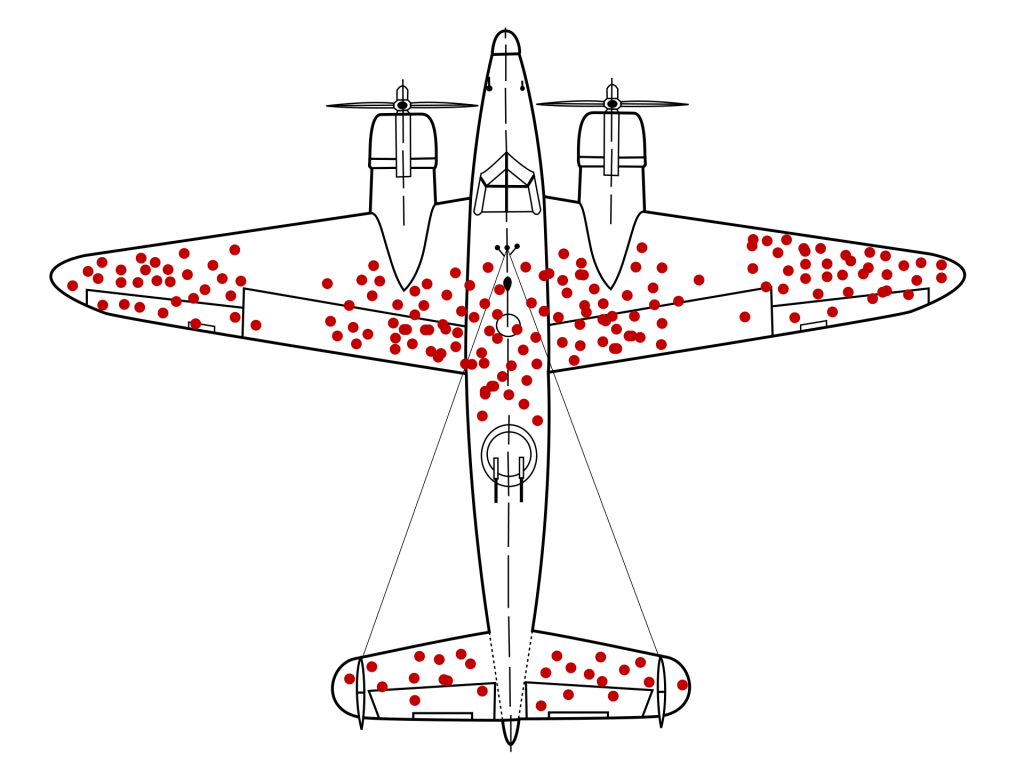
Image credit: Wikipedia
 YourQualityHub
Leave a comment